Ahoy Haikunauts !
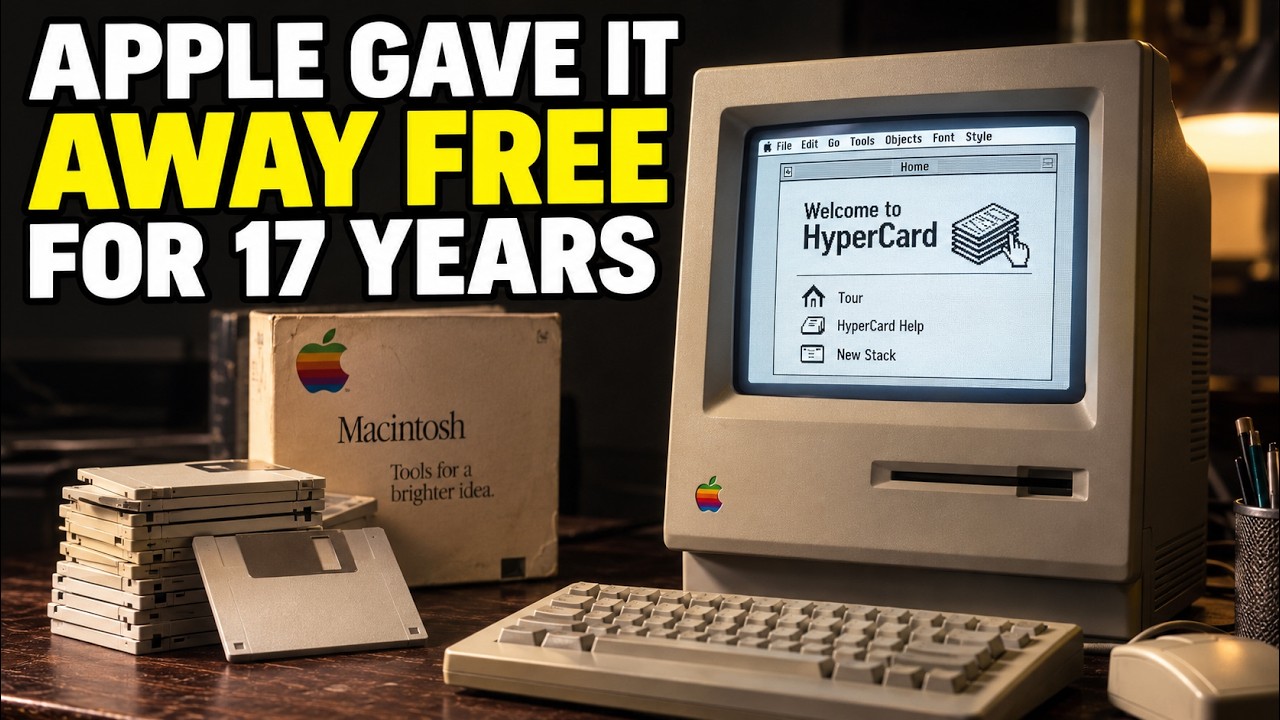
I just watched this video about HyperCard software (added below), that supported to create multimedia content without programming skills, and was shipped free with MacIntosh Classic, and could be run on Apple machines till not moved to Intel processors via compatibility solution that enabled run Classic software to run on them …
Now the contents those created with HyperCard - and called ‘stacks’ - can be run in an emulator that an Internet Archive project secures since 2017-- on 30th anniversary of HyperCard. On a volunteering site they try to collect such remaining stacks created by anyone, and built a MacIntosh machine, and made this machine available via browser to be able to watch those content there.
It needs emulation, as for stacks not possible to write a file converter, as those not just data, but a program that contains the content on cards, and the events between cards, that triggered by clicks to move between cards, and events were written in verbose instructions - that close plain English. This way needed the whole MacIntosh machine emulation instead a converter.
This multimedia relation and that is not needed programming skills to use, just base algorithmic thinking to structure a content, make me think it should have been on BeOS, and a pity the creator this software, who is well known as creator of many famous Apple programs centered its creation to Apple only … I think this Hypercard or equivalent should have been available for BeOS and now for Haiku -
This what makes masses to use an OS if it is available for free and not neeeded to know any sophisticated programming language, but this programming tool’s instructions that close to their spoken language.
I recommend to pay attention that part when HyperCard was compared to (early) web, and what inspirations caused to be created some such software solutions which ones used right now by many user in the world.
Apple Gave Away The Program That Built Myst, Then Deleted It (<-- the same video, as link)
I was not an Apple guy, however in the 1990s years the Apple became available Hungary, but then it was a nieche product, as for its prices and availability as well. In every town/city were a PC shop, but not an Apple shop.
It just changed here with iPod/iPhone/iPad, those made Apple stuff more popular in Hungary as well, so now many people who has many buys Apple product like computers as well from Apple.
Some product I would own from Apple
→ an Apple MacIntosh IIgs with all Apple accessories
→ the Twentieth Anniversary MacIntosh, one original, one modded with DVD drive, and modern display (This was the computer that I saw on an exhibition in Hungary that produced that videos running parallel in many numbers, that BeOS could do just as shipped - If I remember well it was in 1997.
For PC, I remember the crowd was at gaming section to watch something brand new on this exhibition : this was the year when that Star Wars game arrived that contained video clips and needed a CD-ROM drive to play it, as the film parts huge data volume required the CD-ROM format.
I bought my firts OS/2 book, written by Hungarian authors, about the whole Warp version stuff … there.)
→ the “Molar Mac”, also one original, and one modded with modern parts
→ the most powerful translucent G3 laptop
→ a dual G5 with its elegant and heavy housing
→ the 17 inch Intel based laptop
→ it would be good a MacPro beast (even rackmount form ;- )) ) with Intel Proc
→ and a Studio Display : ))
→ and for curiosity an Apple Server too :-j
… but I am not in shape to have a necessary space and money to build/gather such collection, so just remain the cheaper daydreaming about it …

