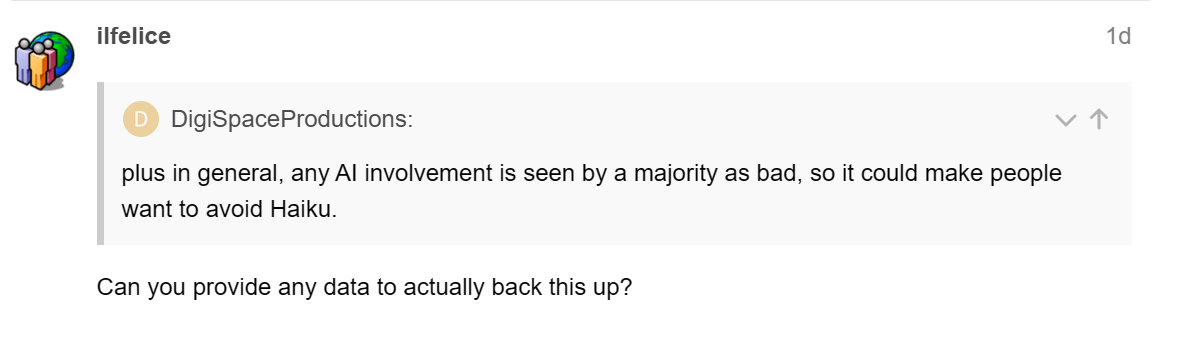
I didn’t find anywhere that you took back your original over-generalized statement that “any AI involvement is seen by a majority as bad”, and understood that you double-downed on it using the American-only data you provided. So I thought to point it out in a bit playful way, where the wink emoji supposed to show that I was not too much serious/worried about it and took it easy, but apparently it was read, and not only by you, as rude, and the emoji instead of softening the tone has actually made it sound as snarky. I apologize for that, it wasn’t meant to be rude in the first place. My learning is that good-natured jokes might be difficult to express in writing, especially when it’s between people from different cultures who don’t know each other (also I have a theory that writing them at 1 AM usually doesn’t help at all). I’ll be more careful in the future.
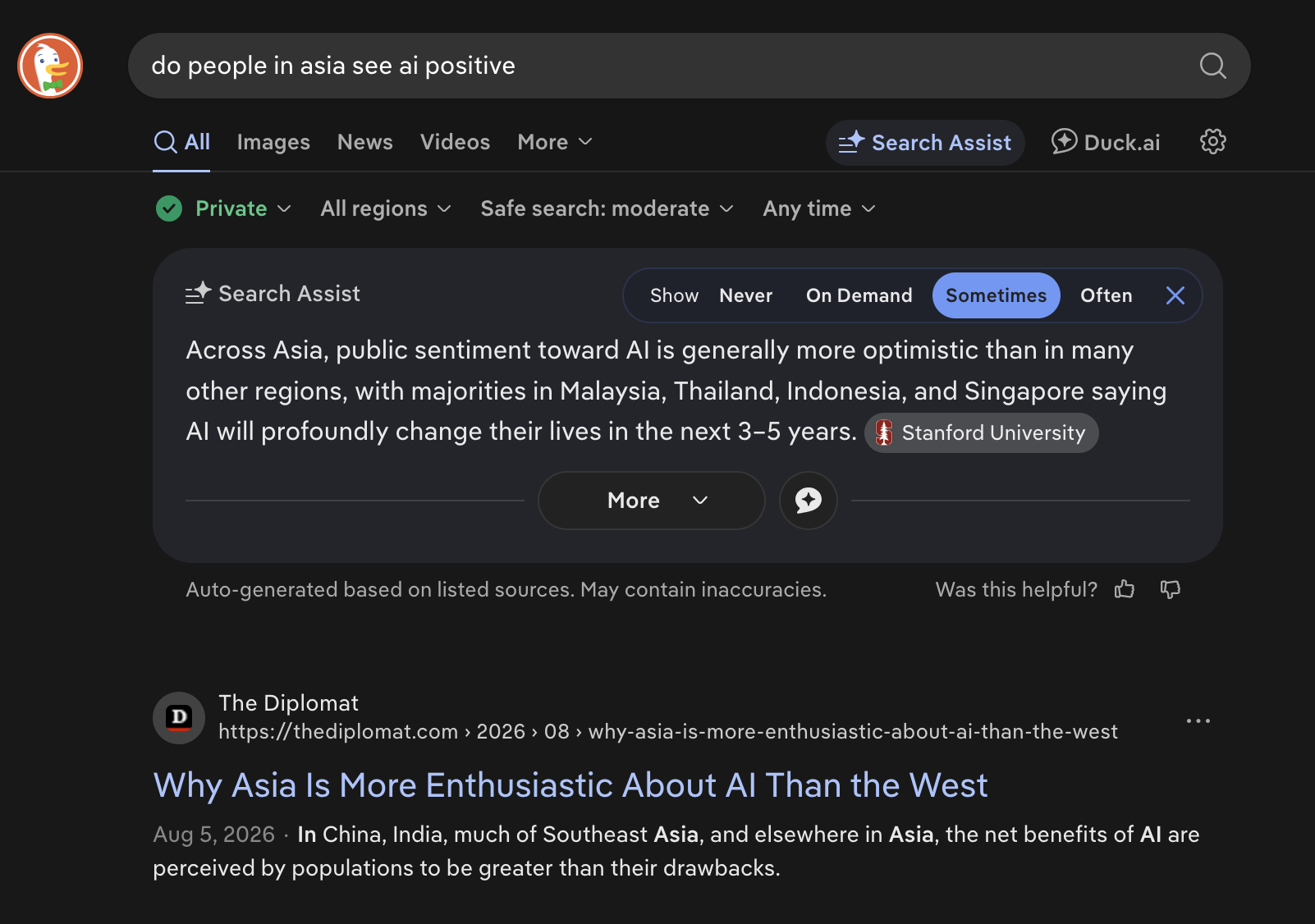
Getting back to data I can only say that luckily there’s still no need to use a VPN to dig it up from the rest of the world, while being in the US (and I hope it’s gonna stay that way). To check it I’ve just connected to a VPN in Atlanta, and searched for “do people in asia see ai positive” and “do people in eu see ai positive”, both in Google and DuckDuckGo.
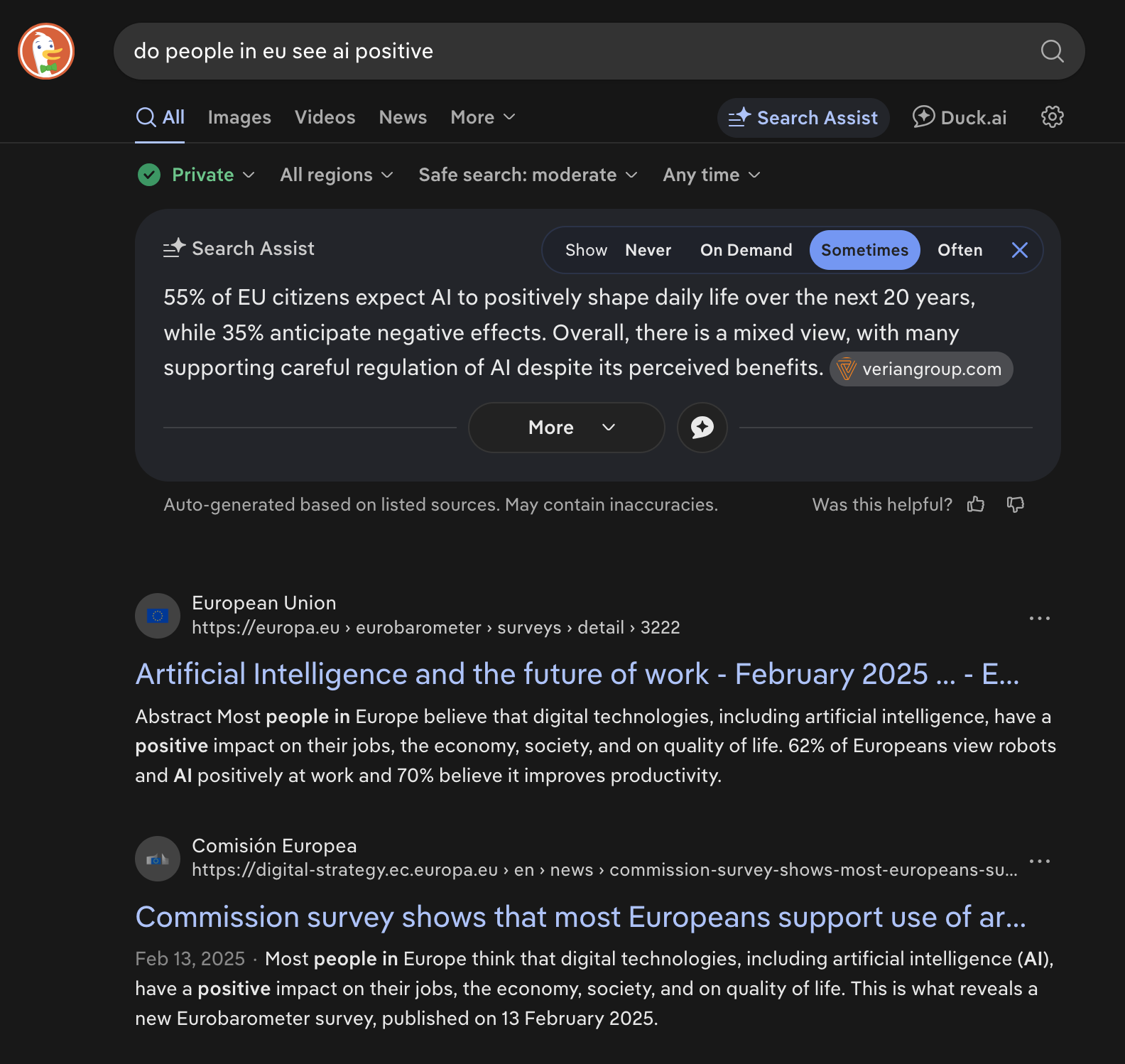
- Eurobarometer
- https://hai.stanford.edu/ai-index/2026-ai-index-report/public-opinion
- https://www.visualcapitalist.com/survey-how-21-countries-view-artificial-intelligence/
- https://archive.is/YDQbj (The New York Times article, “Outside the ‘Worried West,’ Many Feel Good About A.I.”)
So, as I expected, it’s indeed very different in different countries, and we cannot confidently say that any AI involvement is seen by a majority as bad or good.